Car Blocking Your Driveway: 5 Quick Legal Solutions
A car parked right across your gate, a vehicle spilling over your garage entrance, a delivery driver who'll be back "two minutes" and hasn't been seen in twenty… Blocking someone's driveway is one of the most infuriating parking offences — and in France it's punishable under the Highway Code. Here are five ways to fix it quickly, without an argument or a wrong move.
1. Knock on nearby doors first
Before anything else: the car might belong to someone just a few steps away. Do a quick round:
- The bakery across the street, the corner shop, the hairdresser.
- Neighbours in the building if you're in an apartment block.
- Construction workers or tradespeople working nearby.
In roughly one case in two, the driver is 30 metres away and had no idea they were blocking anyone. Five minutes of door-knocking can save an hour of waiting.
2. Leave a clear note — not a lecture
If you're not in an immediate rush, a note on the windshield may work. Rules to follow:
- Keep it factual: "Hi, you're blocking the exit of garage no. 7. Please move the car."
- Don't write your phone number on a visible piece of paper anyone can read.
- Sign with your flat or house number, not your full name.
- No threats or insults — they could be used against you if things escalate.
A note works for a partial block. If your exit is completely sealed, go straight to option 4.
3. Use the horn — but carefully
French traffic law allows horn use "in cases of absolute necessity," daytime only in built-up areas. Two or three short beeps may be enough if the driver is in a nearby shop.
Avoid:
- Long or repeated blasts — fineable up to €35.
- Using it at night in a residential street.
- In an enclosed private car park, the sound won't carry far.
The horn signals presence; it doesn't resolve the situation.
4. Call the municipal police
For a genuine block (driveway exit, disabled bay, pedestrian crossing), the police municipale is the right contact in France. Have ready:
- The exact address of the blocking vehicle.
- Make, colour, plate number.
- A photo proving the obstruction (your exit clearly blocked, your markings respected).
Response time varies: 15 minutes in a city centre, over an hour in residential suburbs. The fine is €35 for simple obstruction, €135 for seriously obstructing a driveway, disabled bay, or pedestrian crossing. Officers can also call for a tow — add 1 to 3 hours for that.
5. Equip your cars with a contact method
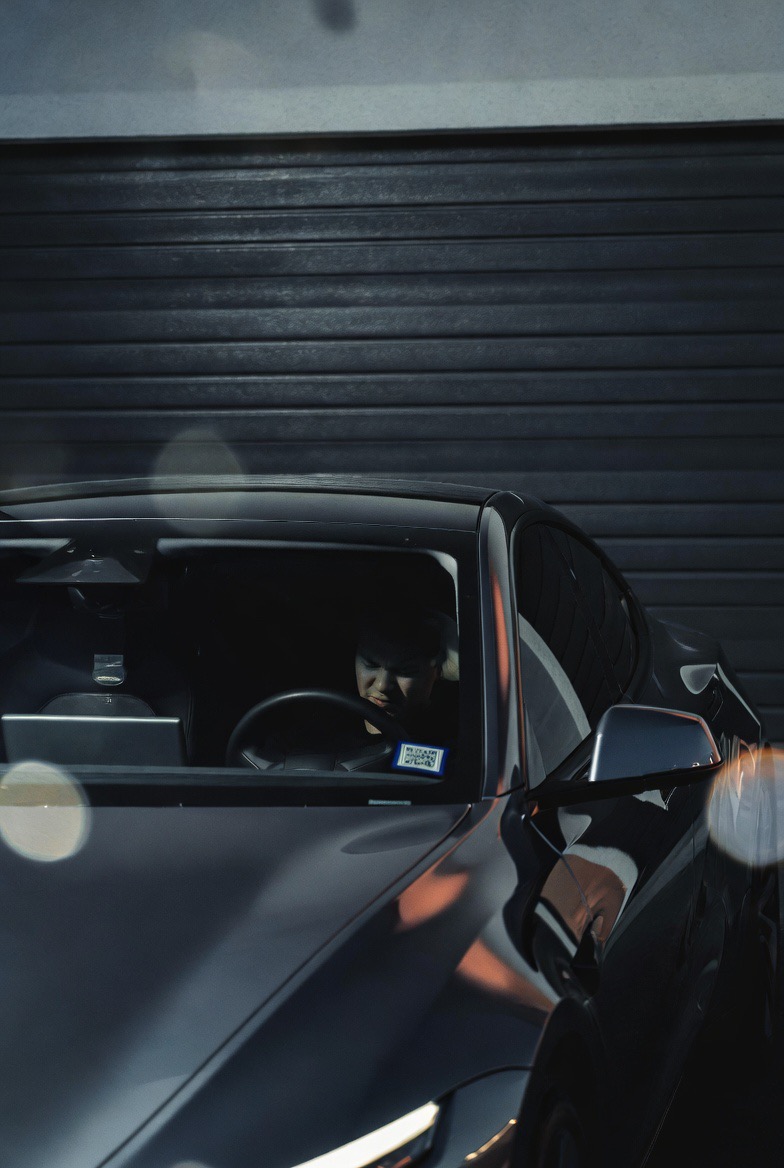
This is the most effective long-term fix, and it's been catching on in apartment buildings and streets with tight parking. The idea: a windshield QR code sticker (like Klaxie) that anyone can scan to message the driver directly — no phone number needed.
If you're blocked, you type "You're blocking my exit at 12 Rue X, please move" and the driver gets an instant push notification.
Real-world benefits:
- The driver typically returns in 4 to 7 minutes, versus waiting for the police.
- No direct confrontation — nobody knows who sent the message.
- No number exposed — zero harassment risk.
This works best when adopted collectively in a building or street, so that both the blocked and blocking cars can benefit.
While you wait
Don't touch the other vehicle. Any damage becomes your legal liability. Take a few timestamped photos — useful for insurance or a formal complaint.
Tired of blocked exits and numbers exposed on scraps of paper? Join the Klaxie waitlist for a more discreet solution.
Read next: Find the owner of an illegally parked car · Neighbour parking in front of your house