Car QR Code: Can You Really Get Spammed or Harassed?
It's the first question most people ask. You stick a QR code on your car, anyone can scan it — what's stopping someone from sending pointless, repeated, or abusive messages?
The short answer: in practice, it's extremely rare. That's not luck — it's the result of several layers of protection working together.
The physical barrier: your first line of defence
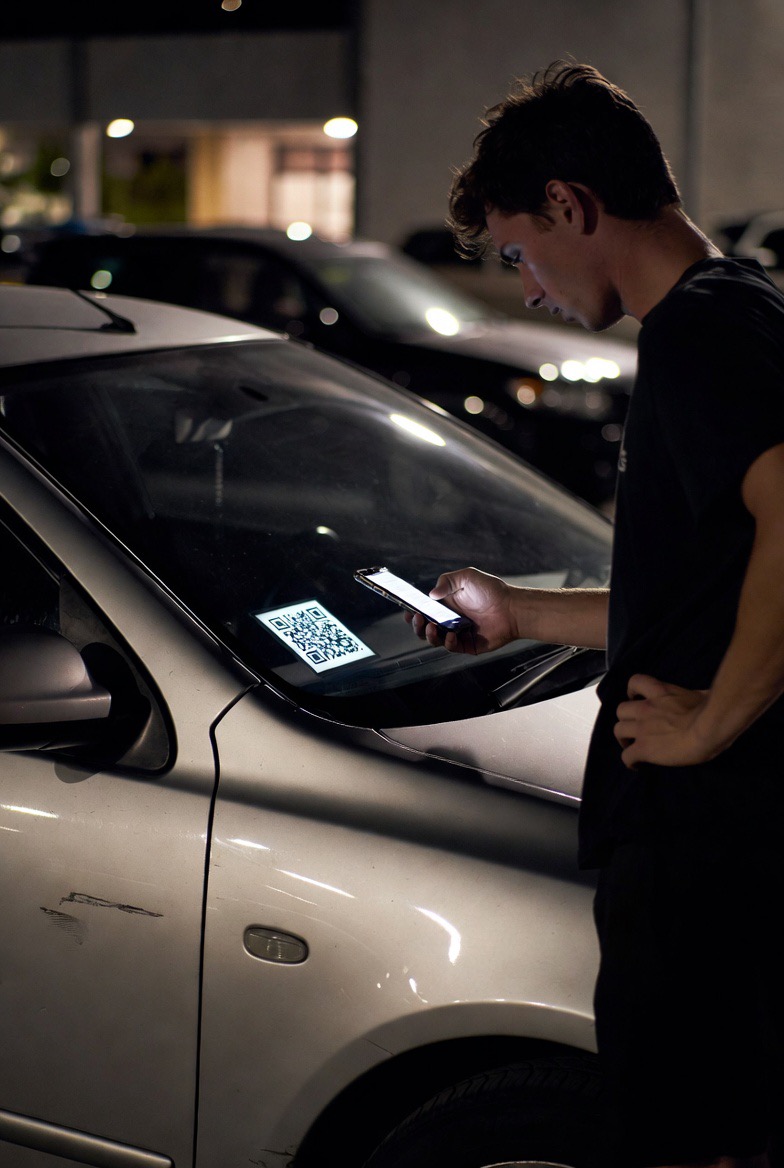
Unlike an email address or a phone number, your Klaxie QR code isn't searchable on the internet, not indexable on Google, not shareable by text. To use it, someone has to be physically in front of your car, phone in hand, and deliberately scan the code.
That single requirement eliminates the vast majority of possible abuse. Spammers and trolls look for targets they can reach at scale from their couch — your QR code forces a physical trip and a deliberate action for every single message. It's a natural filter that's remarkably effective.
Compare that to a phone number on a note: once noted or photographed, it can be used infinitely, from anywhere in the world, at any hour.
What Klaxie does technically
Beyond the physical barrier, several mechanisms protect every vehicle owner.
Rate limiting
Each IP address is limited in how many messages it can send per hour and per day. A sender trying to flood you with messages gets automatically blocked — without you doing anything.
Content filtering
Messages are scanned before they reach you. Content containing insults, abusive terms, or known harassment patterns is intercepted before delivery.
Blocking and reporting
You can block any conversation with one tap. The sender can no longer message you from that session — and if you report the message, it goes to the Klaxie team for review.
Automatic quarantine
Senders flagged by multiple users are automatically quarantined: their messages don't arrive until manually reviewed.
No account required — but traceability preserved
Visitors don't need to create an account to scan and write. That's intentional: we reduce friction for legitimate messages (someone who spots your headlights on isn't going to create an account just to warn you). But sessions are tracked, and abuse is identifiable server-side.
Who actually scans your QR code?
Someone who noticed your headlights are on. A driver who needs to tell you they're blocked. A motorist who grazed your bumper and wants to leave their details without writing a note.
These are people with a concrete, urgent, well-meaning reason — and they want to act fast. Not trolls who would need to hunt down your specific car among thousands just to bother you.
What if someone abuses it anyway?
- You block the conversation with one tap.
- You report the message — the sender is quarantined.
- Your phone number was never exposed at any point.
The worst case with Klaxie: receiving a message you don't care about. You block it, done. The worst case with your number on a note: it gets photographed, passed around, and you receive telemarketing texts for months.
Want to try it? Join the Klaxie waitlist for free — no credit card required.
Read next: QR code vs leaving your phone number on a note · QR code on a windshield: is it legal?